How to Remove Pool Stains
Separate organic stains, metal marks and scale before treating, and avoid damaging a pool finish with trial and error chemicals.
A brown, green or black pool mark is not enough to identify the cause. Leaves, metals, mineral deposits and deterioration can all change a surface’s appearance. Successful stain removal begins with identifying the finish and the likely source.
Record the evidence before treating
Photograph the whole area and a close view. Note whether the mark is raised, rough, slippery or flat, and whether it appeared after leaves settled, a chemical addition, a refill or a metal object entering the pool. Keep the latest complete water report.
Start with the least aggressive check
Remove loose debris and try gentle brushing with a tool approved for the finish. Material that lifts into the water differs from a mark embedded in the surface. Stop if the finish sheds grit, flakes or begins to scratch.
Common categories to investigate
- Organic staining: may follow leaves or other organic material left on the floor.
- Metal staining: can follow dissolved metals, corrosion or a metal containing treatment.
- Scale: may feel raised or appear around splash and evaporation zones.
- Surface damage: can resemble dirt but needs repair rather than cleaning.
These are starting points, not a colour based diagnosis. A professional may use controlled tests suitable for the finish to narrow the cause.
Choose a complete treatment plan
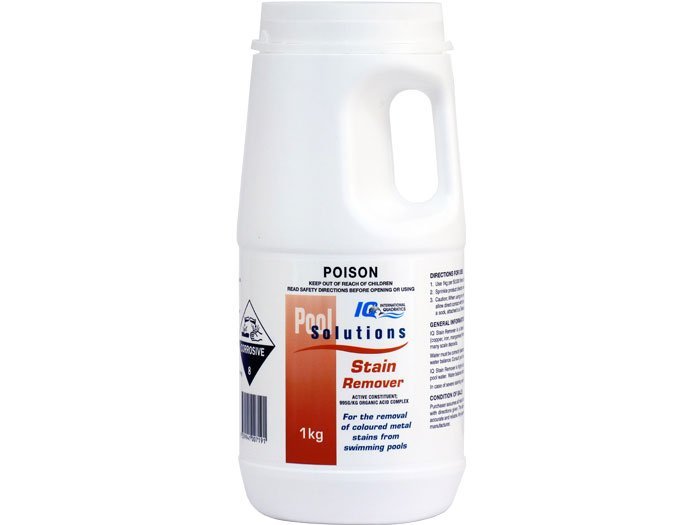
Check product compatibility, required water conditions, application method and swimming restrictions. Ask how the cause will be controlled after the visible mark is removed. A treatment that lifts colour may require further management of metals still present in the water.
Do not place concentrated chlorine or acid directly on an unknown mark as an experiment. Do not combine stain products with other chemicals unless the complete directions support the process. Stronger mixtures can damage the finish and create a handling hazard.
When to get a specialist assessment
Widespread staining, repeated marks after treatment, a new finish or an uncertain material deserve assessment before further work. Full draining or acid washing should follow an inspection of the pool and groundwater risk, not serve as the default stain treatment.
Prevent recurrence
Remove debris promptly, address rusting objects and review the source water and treatment products. Keep before and after photos. Read metal staining and tile cleaning for more focused next steps.