How to Balance Pool Alkalinity
Use pH and total alkalinity together to plan a measured correction and avoid a cycle of adding acid and buffer.
Total alkalinity helps explain how strongly your pool water resists a change in pH. It is a different test from pH, even though the two interact. The aim is a stable balance appropriate to the pool, rather than repeatedly pushing each reading towards the middle of a generic test chart.
Read both results together
Write down sanitiser, pH and alkalinity before making a correction. Add the date and amount of any recent acid, buffer or refill water. If the result is unexpected, check reagent condition and repeat the test after the required mixing time.
When alkalinity is low
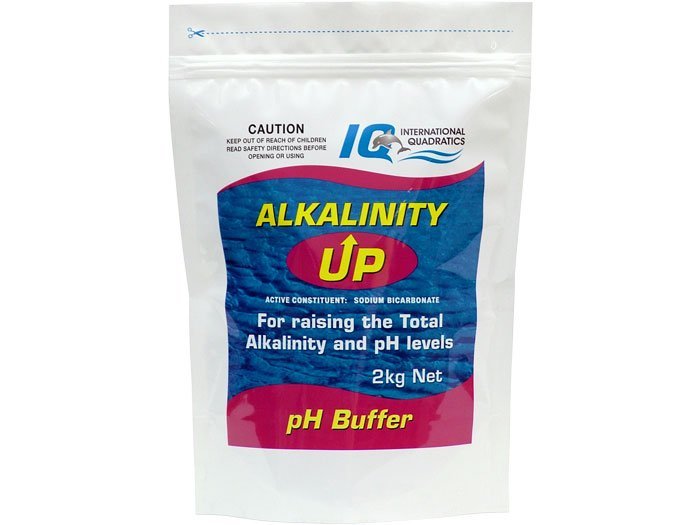
A suitable alkalinity increaser may be needed once the target and volume are confirmed. Many pool buffers use sodium bicarbonate. That is different from products used mainly to raise pH. Choose by the active ingredient and instructions, not just the product name.
Scale the labelled dose to your pool volume and required increase. Follow any limit on the amount applied at once. Allow the specified circulation and retest before the next adjustment. Our alkalinity increaser guide explains the calculation in more detail.
When alkalinity is high
Acid can lower both pH and alkalinity, so a correction needs to account for both results. Do not keep adding acid to chase alkalinity while allowing pH to become unsuitable. A pool professional can plan staged adjustments that suit the starting balance and equipment.
Never mix acid and chlorine or combine concentrated products in a bucket. Follow the product’s handling and application directions and keep swimmers out during treatment.
Why pH may keep rising
Record waterfall and spa jet use, aeration, chlorinator operation and recent surface work. These observations can help explain a pattern. A pH rise does not automatically mean the pool needs more buffer, and repeated opposite adjustments can add cost without solving the cause.
Keep a useful correction log
- Record the starting pH and alkalinity.
- Note the exact product and measured amount.
- Record the circulation period and follow up results.
- Review several readings before declaring the problem fixed.
If the water is already stable, avoid unnecessary adjustment simply to reach an arbitrary ideal. If it swings widely, send the log and pool details with a water care enquiry.
Further reading: SPASA, water balance.