How to Raise Pool Alkalinity Without Chasing Your pH
Understand what alkalinity does, check the result and calculate a label based dose without confusing alkalinity increaser with pH increaser.
Reviewed and updated 8 October 2026.
If your pool’s pH keeps moving after every adjustment, total alkalinity is worth checking. But cloudy water, uncomfortable swimming or a single unusual test result does not prove that you need an alkalinity increaser. Start with a reliable set of water results and a target appropriate to your pool finish, sanitiser and equipment.
For Sydney owners, the most useful time to reassess is after a substantial water replacement, an overflow followed by topping up, or repeated chemical adjustments. Rain is a reason to test. It is not a reliable dosing instruction.
Alkalinity and pH answer different questions
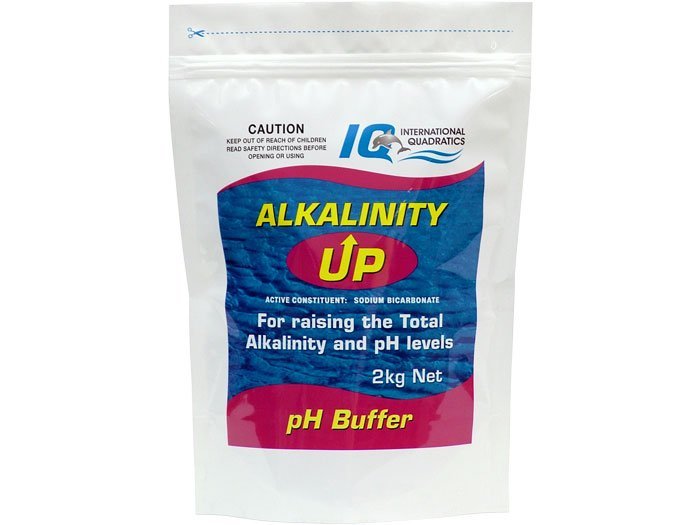
pH describes how acidic or alkaline the water is. Total alkalinity describes its ability to resist changes in pH. They interact, but they are not interchangeable readings. Many alkalinity increasers use sodium bicarbonate; Focus pH Buffer is one manufacturer example. A product sold as pH increaser may have a different active ingredient and a different effect. Read the label instead of choosing by bag colour.
Raising alkalinity can help when the measured level is too low, but raising it indefinitely is not better. If pH already tends to climb, repeatedly adding buffer can complicate the problem. Use the target supplied for your actual pool rather than treating a broad online range as a precise prescription.
Confirm the result before buying a chemical
Check the test kit expiry date and storage condition. Heat and moisture in an equipment shed can compromise supplies. Follow the sample volume, drop count and endpoint instructions exactly. Repeat an unexpected result with a fresh sample; if results remain inconsistent, arrange a second test before dosing.
Write down pH, total alkalinity and sanitiser results together. Also note recent acid, buffer or water additions. A sample taken immediately after treatment may not represent the whole pool. Allow the mixing time specified by the product before using a new reading to make the next decision.
Work from the label and your pool volume
Find the label dose for a stated volume and stated alkalinity increase. Scale it for both your pool’s volume and the required change. The arithmetic is: required product = label dose × your pool volume ÷ label reference volume × required increase ÷ label reference increase. Keep the units consistent throughout.
As an arithmetic example only, imagine a label says 100 g treats 10,000 litres for a specified increase. A 50,000 litre pool needs five times that quantity for the same increase. If you also require twice that increase, the multiplier becomes ten. This example explains scaling; it is not a product dose and must not replace the instructions on your container.
An accurate volume matters. Use the builder’s record if available, or have the volume estimated from the pool dimensions and depth profile. An irregular shape, beach entry or attached spa can make a casual length × width × depth estimate unreliable. Keep the volume on file so future adjustments are consistent.
Apply one planned adjustment at a time
Read the product’s handling, application, circulation and swimming instructions before opening it. Wear its specified protective equipment and keep swimmers away during treatment. Use a clean, dedicated measuring tool. Never mix different pool chemicals, and do not assume every powder should be dissolved in a bucket first.
Use the application method on the label and ensure the equipment is operating as required. Avoid leaving concentrated product on the pool finish. If the label calls for staged additions, follow those stages. If a large correction is indicated but the readings or volume are uncertain, get advice rather than committing to the entire calculated amount.
After the prescribed circulation interval, retest and record the change. Check pH again as part of that review. Do not alternate buffer and acid rapidly while testing partly mixed water: that produces a confusing set of readings and can lead to unnecessary chemical use.
If the numbers keep moving
Compare the changes with your maintenance record. Did you add acid? Did the pool overflow? Has a leak caused repeated topping up? Was the second sample taken before circulation had mixed the water? Those details often explain why a previously sensible treatment appears to have failed.
A stable alkalinity reading does not eliminate the need for separate pH and sanitiser checks. Similarly, reaching a target alkalinity does not automatically make water ready for swimming. Follow the treatment label’s return to swimming conditions and verify the relevant water results.
Build a useful water record
Record the date, estimated volume, original readings, product name, quantity, application time and follow up readings. Photograph the label if you ask for help. That makes it possible to review the actual treatment rather than reconstruct it from memory.
For a pool that keeps needing correction, request a water balance and equipment assessment. The goal is a repeatable maintenance routine, with adjustments based on evidence rather than a standing habit of adding buffer.