How to Use a Pool Cover Effectively
A complete guide on how to use a pool cover effectively and why it matters for pool owners.
A pool cover works best when it is easy enough to use every day. The right cover can reduce evaporation, retain heat, keep leaves out and reduce the amount of cleaning your pool needs.
Choose the right type of pool cover
Start with what you want the cover to do. A solar cover is designed for everyday use, heat retention and evaporation control. A thicker thermal foam cover is better where retaining purchased heat is the priority. A leaf cover is useful for pools with a heavy debris load or for longer periods when the pool is not being used.
- Solar cover: a practical choice for most outdoor residential pools. Compare our Daisy 525B, 400B and 250B options.
- Thermal foam cover: useful for heated pools where reducing heat loss matters most. See the Daisy ThermoTech.
- Leaf and debris cover: useful for leafy backyards and extended periods out of use. See the Daisy WinterKleen.
You can also browse the complete Pool Covers range.
Put the cover on whenever the pool is not being used
For a solar or thermal cover, regular use matters more than occasional use. Put it back on after swimming once the water has settled and any required chemical treatment has been allowed to circulate according to the chemical manufacturer’s directions.
If you have just added a strong chlorine treatment or other concentrated chemical, do not immediately trap fumes under the cover. Allow the water to circulate and follow the product instructions before covering the pool again.
Keep the cover floating flat
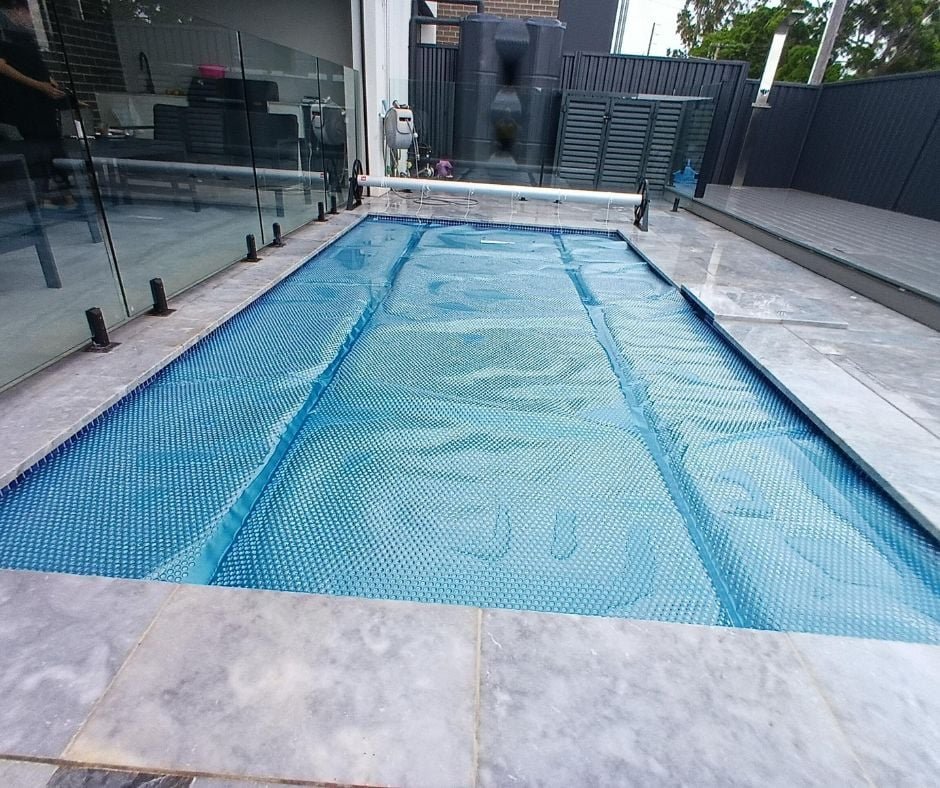
A solar cover should sit bubble side down on the water. Keep it reasonably flat across the surface rather than bunched up. A correctly sized cover gives better coverage and is easier to roll on and off.
For irregular pools, steps and raised sections, measure the main body of water and any step area separately. If you are unsure, send us the pool dimensions and photos before ordering.
Use a roller if the cover is used regularly
A roller makes a large difference to how often a cover is actually used. It also helps avoid dragging the cover across paving or bunching it up beside the pool.
For a stationary setup, the Daisy A75 and Daisy SQ are useful options. If you need to move the roller away from the pool area, look at the Daisy FM fully mobile roller.
Protect the cover when it is off the pool
Do not leave a rolled or folded solar cover exposed to full sun for long periods without protection. Heat can build up quickly in the material when it is out of the water. Use the roller over cover supplied for the system, store the cover in shade where possible and avoid placing heavy objects on top of it.
Keep the cover clean
Leaves and debris should be removed before rolling the cover up. Rinse dirt from the cover with clean water when required. Avoid harsh cleaning chemicals unless they are specifically approved for the cover material.
Do not use the cover as a safety barrier
A standard solar, thermal or leaf cover is not a substitute for a compliant pool barrier. Keep your pool fence, gates and other required safety measures maintained independently of the cover.
Which Daisy cover should I choose?
For most outdoor pools, the choice comes down to budget and expected lifespan. The 250B is the entry option, the 400B is the mid range option, and the 525B is the premium solar cover. ThermoTech is aimed at stronger thermal insulation, while WinterKleen is designed around leaf and debris protection.
If you want help matching a cover and roller to your pool, send Pool Perfectionists your pool dimensions and a photo. We can recommend the cover thickness, roller type and sizing before you order.