Pool Stabiliser Explained, What Cyanuric Acid Does
Learn how stabiliser protects chlorine, when to test it and why adding more is not always helpful.
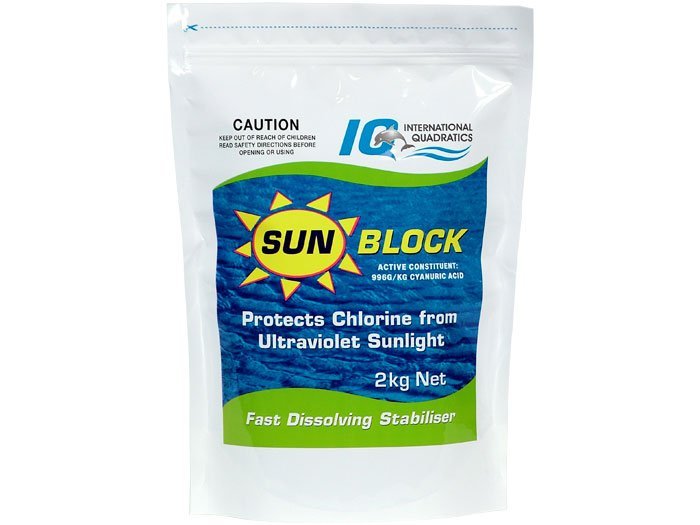
Cyanuric acid, also called stabiliser, protects chlorine from sunlight in an outdoor pool. It also changes how chlorine behaves, so more stabiliser is not automatically better.
Find out what is already in the water
Test before adding any stabiliser. Some chlorine tablets and granules contain it, so regular use can raise the level even if you never buy a separate stabiliser product. Check the active ingredients on every chlorine label.
Choose the target for your system
Use the chlorinator or sanitiser manufacturer’s guidance, taking the pool’s existing water balance into account. Indoor pools and outdoor salt pools do not necessarily need the same approach. A single target copied from another pool can be misleading.
Add only what the test calls for
- Confirm pool volume and the current reading.
- Calculate the addition from the product label.
- Use its specified application method and circulation time.
- Wait the stated interval before retesting or adding more.
Do not scatter undissolved product onto a delicate finish or use a skimmer application unless the label permits it.
If the reading is high
How stabiliser changes your routine
Stabiliser is useful because outdoor chlorine is exposed to sunlight. However, the operating plan must account for the stabiliser already present. A free chlorine result interpreted without knowing stabiliser can give an incomplete picture of water care. Keep the two results in the same log rather than treating stabiliser as an occasional separate purchase.
Check every source
Read the active ingredients on tablets and granular chlorine. If you change from one type to another, note the date and watch the stabiliser trend. Topping up a feeder every week can gradually add more than you expect, while evaporation does not remove stabiliser in the same way that replacing water does.
A dosing example without guessing the product
If a label specifies a quantity per 10,000 litres for a particular increase, a 40,000 litre pool uses four times that quantity for the same increase. That calculation is only useful when the starting reading, volume and required change are all sound. Do not apply a rate from another brand or concentration.
Common questions
Should I add it every time it rains? Test first. Rainfall, overflow and top-ups can change concentration, but the amount varies.
Does a salt pool still need testing? Yes. Salt and stabiliser are different measurements, and the chlorinator’s recommendations should guide the operating plan.
Why has the result not changed yet? Follow the product’s dissolution and retesting interval. Adding another dose before the first is fully reflected in a test can overshoot the intended level.
If the pool needs repeated stabiliser corrections, bring the product history and recent water results into the discussion so the cause can be reviewed.
Stop adding stabilised chlorine while a suitable sanitising alternative is arranged. Water replacement may be needed, but should be planned around the pool structure and drainage conditions. Read our high stabiliser guide before lowering the water.