Pool Algaecides, When They Help and When They Do Not
Compare the role of algaecide with chlorine, brushing and filtration, and check compatibility before adding a treatment.
Algaecide can be part of a pool treatment programme, but it cannot compensate for a failing chlorinator, poor circulation or debris left on the floor. Start by identifying why algae is growing.
Check the basics first
Test sanitiser, pH and stabiliser. Brush affected areas, remove debris and confirm that water is moving through the filter. If chlorine repeatedly disappears, investigate the cause rather than adding several treatments at once.
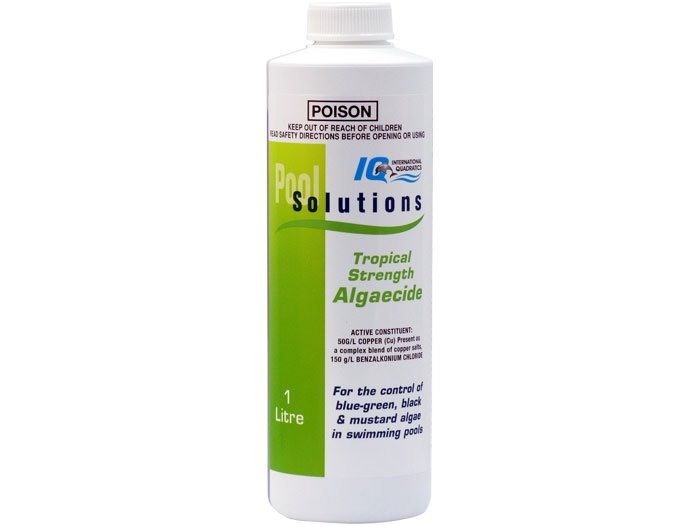
Read the active ingredient
Products sold as algaecides are not interchangeable. Some contain copper, which needs careful management to avoid staining. Others may foam if misused. Check suitability for your finish, sanitiser and any other chemicals already added.
Use a measured treatment
- Confirm the pool volume and the type of problem.
- Choose a compatible product and follow its treatment sequence.
- Observe its dose, circulation and swimming restrictions.
- Remove debris and monitor filtration as the pool recovers.
A maintenance dose and an initial treatment dose can differ. Adding extra because the water is very green can introduce a second problem without resolving the first.
Prevent the next outbreak
Choosing between treatment and prevention
Some algaecides have different directions for an active outbreak and ongoing prevention. Read the intended use carefully. A pool that is already green may need a recovery sequence involving sanitiser, brushing and removal of dead material, while a clear pool may simply need its routine corrected.
Why the surface matters
A smooth fibreglass pool, tiled concrete pool and porous aged finish can retain dirt differently. Identify whether a dark mark is actually algae before treating it. A metal stain or deteriorated patch will not be solved by repeatedly applying an algaecide.
Questions to answer before buying
- What active ingredient is in the product?
- Is it compatible with the pool finish and current sanitiser?
- Does the label specify limits on other treatments or water conditions?
- How will the dead material be removed?
- What should be checked if the first treatment does not work?
A recurring summer problem
If algae returns after every busy weekend, compare the chlorinator’s output and running time with the increased swimming load. If it returns in the same shaded corner, inspect circulation and brushing. The visible pattern can point towards the maintenance change that matters most.
After treatment
Do not judge success only by colour. Confirm that surfaces are clean, filtration is functioning and the pool maintains suitable water results through normal use. Keep records of any metal-containing treatments so future staining can be assessed with a complete history.
A successful recovery should leave you with a clearer explanation of why the problem developed and a practical routine that reduces its chance of returning.
Check shaded steps and corners, empty baskets and adjust the care routine when swimming or weather changes. Repeated algae calls for a review of sanitiser output and water results. Read our algae recovery guide or ask us to assess recurring algae.